
Best 3 Days Golden Triangle Tour Packages for First-Time India Travelers (2026)
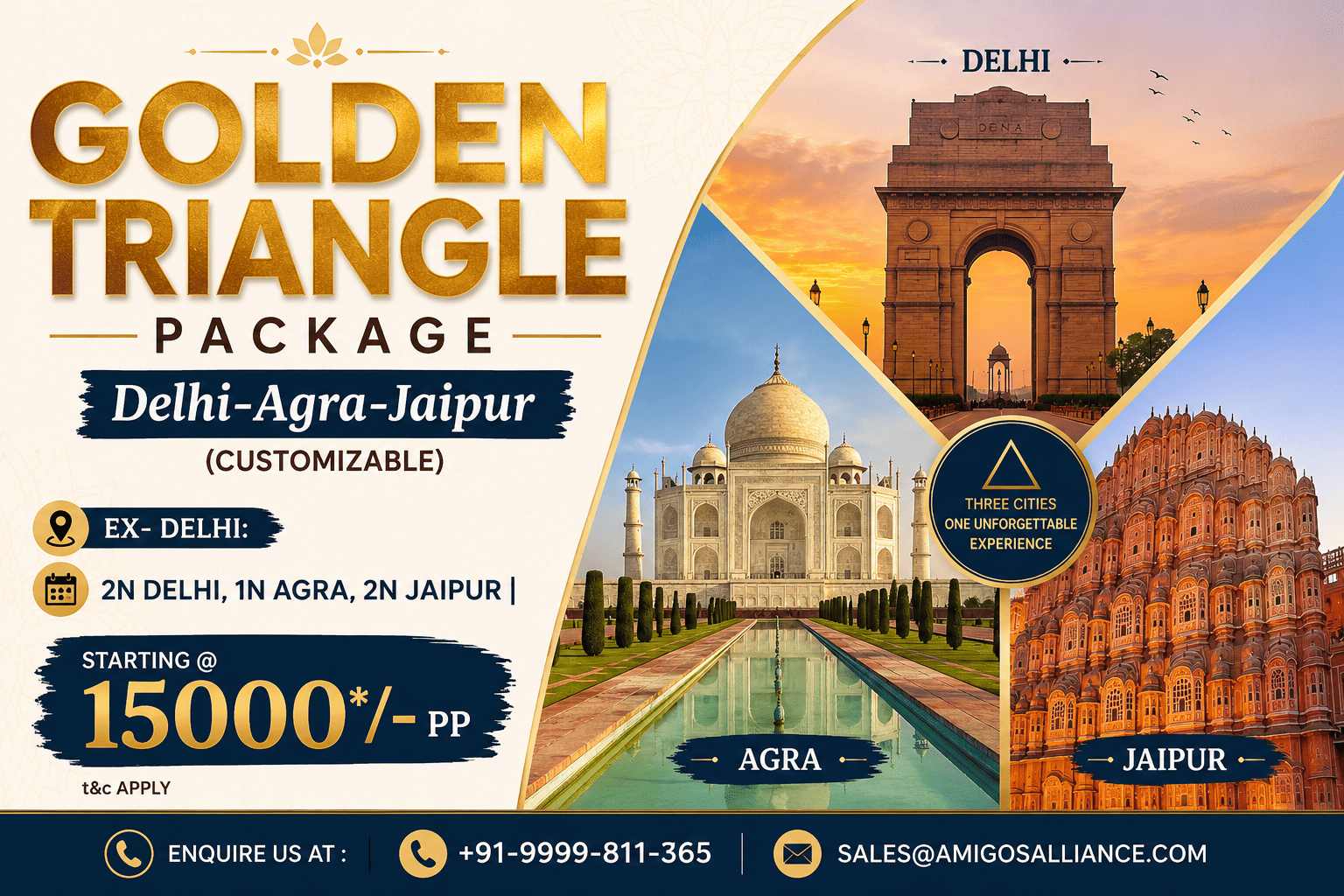
The best 3 days golden triangle tour packages offer first-time visitors an efficient way to experience India’s most iconic destinations. This famous route connects Delhi, Agra, and Jaipur, creating a triangle on the map that showcases the country’s rich history and architectural wonders, including the Taj Mahal. Whether you’re considering a luxury experience or a budget-friendly option, I’ll walk you through the top tour packages for 2026, what to expect in each city, and practical planning tips to make your first trip to India unforgettable.
What is the Golden Triangle Tour in India
India’s Golden Triangle is a tourist circuit connecting three of the country’s most culturally significant cities: Delhi, Agra, and Jaipur. These northern cities form an almost equilateral triangle when viewed on a map, giving this route its distinctive name. The circuit covers approximately 720 kilometers by road, with each leg taking about 4 to 6 hours of driving. When you measure the distances more precisely, Delhi to Agra spans 233 km, Agra to Jaipur covers 237 km, and Jaipur back to Delhi stretches 273 km.
This route has become one of the most traveled paths in India, offering visitors a well-connected journey through diverse landscapes and historical periods. The Shatabdi Express, Vande Bharat Express, and Gatimaan Express trains connect these cities efficiently, while smooth highways make road travel equally convenient. For those planning 3 days golden triangle tour packages, understanding what each city offers helps you make the most of your limited time.
Delhi: The Historic Capital
Delhi serves as the starting point for most Golden Triangle journeys. The city splits into two distinct personalities that feel worlds apart. Old Delhi presents a maze of crumbling buildings, narrow lanes, and bustling markets that transport you centuries back in time. New Delhi, by contrast, showcases orderly boulevards, colonial architecture, and modern infrastructure.
Chandni Chowk stands as one of Old Delhi’s most authentic experiences. Shah Jahan built this market in the mid-17th century, with his daughter Jahanara designing its original layout. What started as an elite market with gardens and orderly roads has transformed into a frenetic commercial hub. Walking through Chandni Chowk overwhelms your senses with vendors selling spices, jewelry, fabrics, wedding supplies, and brass products. The place fills with people, cars, rickshaws, and occasional animals creating controlled chaos that defines Delhi’s character.
The Red Fort served as the main residence of Mughal emperors and remains one of Delhi’s most imposing structures. Built from red sandstone, this massive complex tells stories of power and grandeur from centuries past. Nearby, Jama Masjid stands as another architectural marvel from the Mughal period, offering a glimpse into the religious and cultural life of Old Delhi.
Moving toward New Delhi, you’ll find monuments that showcase different periods of Indian history. Qutub Minar predates the Mughal Empire, completed in 1368. The complex comprises three major structures: the Quwwut-ul-Islam Mosque, the Qutb Minar tower, and the Alai Darwaza. The mosque lies largely in ruins, but its remaining arches and columns display incredible detail. Each pillar features artful decorations with remarkable stone carvings that demonstrate the craftsmanship of that era.
Humayun’s Tomb houses the remains of Emperor Humayun and around 160 members of his family and descendants. This enormous structure, built primarily from red sandstone with a gargantuan marble dome, exemplifies Mughal architecture’s signature symmetry. The symmetry appears in both the structure and the expansive grounds that stretch in all directions. Besides these historical monuments, Delhi offers modern attractions like India Gate, the Lotus Temple, and bustling markets in South Extension and Connaught Place.
Agra: Home of the Taj Mahal
Agra sits 200 km south of New Delhi on the banks of the Yamuna River. Over three centuries ago, this medieval city served as the powerful Mughal capital and the most important city in northern India. Sultan Sikandar Lodi founded Agra in 1956, but it achieved fame when it became the Mughal capital from 1526 to 1658.
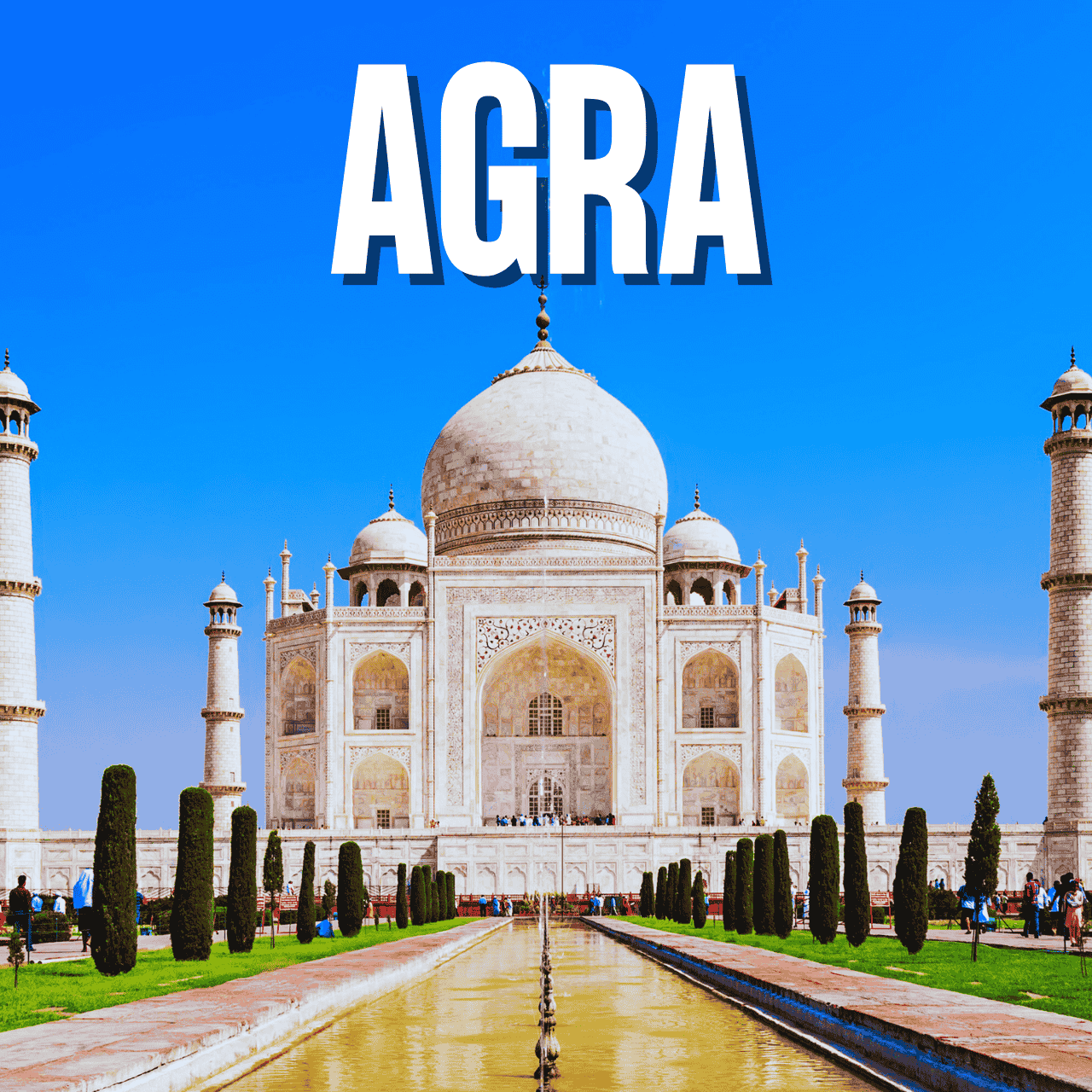
The Taj Mahal draws over seven million visitors each year, making it the most photographed monument in the world. Shah Jahan, the fifth Mughal emperor, built this white marble masterpiece in the 17th century as a memorial to his wife Mumtaz Mahal. She died giving birth to their 14th child, and on her deathbed, she made three requests: that Shah Jahan not remarry, that he care for their children, and that he build her a tomb unlike anything the world had seen.
The construction of this architectural wonder took over 20,000 skilled workers from across the country, working day and night for 22 years. Set against the serene waters of the Yamuna River, the Taj Mahal changes appearance throughout the day as light plays across its white marble surface. Visiting at sunrise reveals the monument in soft golden hues, while sunset bathes it in warm orange tones.
Agra Fort stands as the city’s other major attraction. Built from red sandstone, Emperor Akbar started this semi-circular fort in 1565 and completed it in 1574. The fort served as Akbar’s capital, from where he ruled the Mughal Empire. His grandson Shah Jahan added several buildings within the complex. In a cruel twist of fate, Shah Jahan was imprisoned in Agra Fort shortly after completing the Taj Mahal. From his cell, he could see the distant outline of his wife’s tomb but could never enter it again.
The fort contains a complex of palaces, meeting halls, pavilions, gardens, and temples, functioning as a complete city within its walls. The Diwan-e-Aam (Hall of Public Audience) and Diwan-e-Khas (Hall of Private Audience) showcase the administrative structure of Mughal rule.
Fatehpur Sikri lies 40 km from Agra, a city built entirely from red sandstone. Emperor Akbar conceived and built Fatehpur Sikri in 1571, dedicating it to a local saint who predicted the birth of his son after several losses. The city served as the Mughal capital briefly before being abandoned due to water supply difficulties. A wall stretching 6 km in circumference surrounds the city. Within Fatehpur Sikri, you’ll find the Jama Masjid, Salim Chisti’s tomb, the Diwan-e-Aam, the Diwan-e-Khas, and the Queen’s palaces.
Jaipur: The Pink City
Jaipur, the capital of Rajasthan, completes the Golden Triangle circuit. Maharaja Sawai Jai Singh II founded this city in 1727, making it India’s first planned city. The entire old city follows a grid layout divided by nine roads each way with wide streets, showing impressive foresight for such an old establishment.
The city earned its “Pink City” nickname when it was painted pink for the visit of Prince Albert from England[24]. Pink was chosen as a welcoming color, but it also helped hide the shoddy materials and workmanship of some buildings at that time. Walking through the walled old city, you’ll see this distinctive pink color scheme on buildings throughout the area.
Amber Fort sits atop a hill, offering spectacular views of the surrounding landscape. Raja Man Singh built this fort in the later half of the 10th century, and it served as the royal capital for seven years before the city of Jaipur was established. The fort ranks as one of the finest and best-preserved forts in India, featuring a complex of palaces, meeting halls, pavilions, gardens, and temples. Made with red sandstone and marble, Amber Fort displays opulence and architectural splendor through its maze-like passages, expansive courtyards, serpentine staircases, and elaborate gateways.
The City Palace became the official seat of the Jaipur royal family after 1922. Sawai Jai Singh built this brilliant palace, and a large portion now functions as a museum. The museum displays an excellent collection of artifacts used by Rajput royalty, giving visitors insight into their lifestyle and culture. The palace complex includes several buildings and courtyards, including the ornate Chandra Mahal and the Mubarak Mahal.
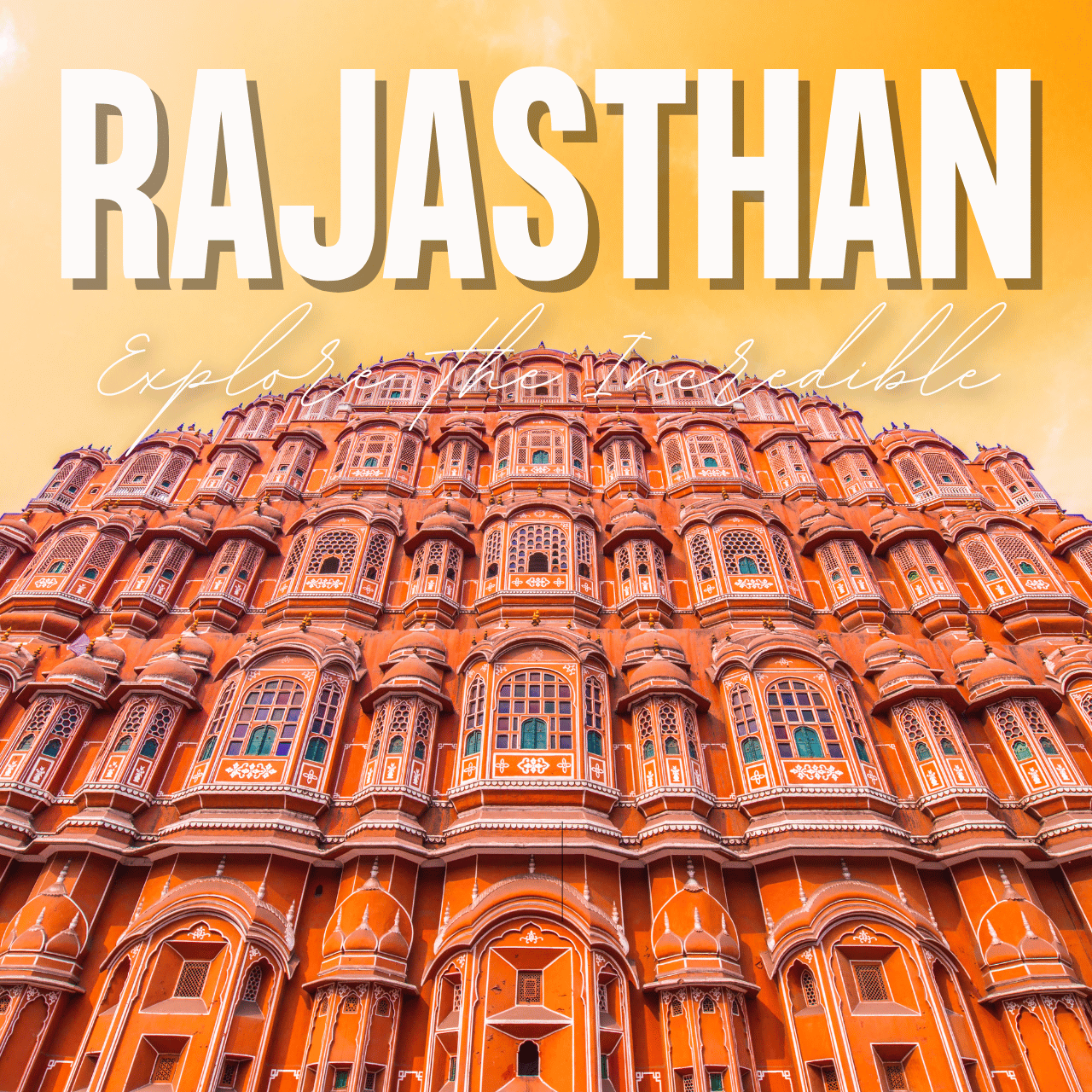
Hawa Mahal (Palace of Winds) serves as Jaipur’s most recognizable attraction, overlooking the main street in the lively old city[13]. This beautiful pink sandstone palace features intricately carved windows. The ornate facade was used by noblewomen to watch street life and processions while remaining unseen from outside.
Jantar Mantar, built in 1728, stands as one of Sawai Jai Singh’s unique observatories. The site contains instruments scientifically designed to predict the movement of major stars accurately. These astronomical instruments represent the high point of medieval Indian astronomy, demonstrating the advanced scientific knowledge of that period.
Jaipur’s bazaars offer shopping experiences that define Rajasthani culture. Johari Bazaar specializes in jewelry and traditional Rajasthani crafts, while other markets throughout the pink city sell textiles, handicrafts, and local delicacies. The bustling markets provide a sensory experience with vivid colors, traditional architecture, and the energy of daily commerce.
Why These Three Cities Matter
The Golden Triangle works particularly well for first-time India travelers for several practical and cultural reasons. These cities showcase three distinct regions within a compact geographical area. Jaipur introduces you to Rajasthan’s desert state culture, Agra represents Uttar Pradesh with its Mughal heritage and religious landmarks, and Delhi presents a unique metropolitan experience found nowhere else.
The historical importance of these cities cannot be overstated. They ruled major parts of India during different periods, and the monuments around these locations represent a combination of various cultural influences. From Mughal architecture in Delhi and Agra to Rajput royal heritage in Jaipur, you experience different chapters of Indian history within days.
Accessibility makes this circuit practical for short trips. The destinations connect well by road and superfast trains, making transportation straightforward even for first-time visitors. Hiring a car with a driver remains popular for those preferring flexibility, while train travel offers an authentic Indian experience at reasonable prices.
The concentration of UNESCO World Heritage Sites adds value to this route. Delhi features Humayun’s Tomb and Qutub Minar, Agra boasts the Taj Mahal and Agra Fort, and Jaipur includes Amber Fort among its protected sites 31. Few other routes worldwide pack this many internationally recognized monuments into such a short distance.
For travelers with limited time, the Golden Triangle provides a balanced introduction to India’s complexity. You encounter the chaos of Delhi’s streets, the romantic history of Agra’s monuments, and the royal elegance of Jaipur’s palaces. The variety prevents monotony while building a foundation for understanding India’s diverse character. Markets range from Delhi’s Chandni Chowk to Jaipur’s jewelry bazaars, offering different shopping experiences in each location.
The circuit accommodates all budget levels, from backpackers spending minimal amounts to luxury travelers seeking five-star experiences. Infrastructure developed for tourism means you’ll find English speakers, reliable transportation, accurate navigation apps, and accommodation options at every price point. This accessibility reduces stress for first-time visitors while still providing authentic cultural immersion.
What is the Golden Triangle tour in India ultimately becomes clear through this combination of factors. It connects three cities that each represent a different facet of Indian culture, history, and regional identity. The route balances accessibility with authenticity, offering enough structure for nervous first-time travelers while delivering genuine experiences of India’s heritage, architecture, and daily life.
Top 3-Day Golden Triangle Tour Packages for 2026
Multiple tour operators run 3 days golden triangle tour packages across different price points and service levels. Prices start from USD 145 for basic packages without accommodation and reach USD 700 for luxury private tours with premium hotels. I’ve broken down the main package categories to help you find what fits your travel style and budget.
Classic Golden Triangle Package
The Delhi Tourism official package operates on a fixed schedule, departing at 7:00 a.m. every Tuesday and Friday. Adults pay 6,825 rupees (approximately USD 82), while children’s tickets cost 6,090 rupees. This government-run option includes AC transportation, AC accommodation, and guide charges in the tariff.
The route covers all major monuments across the three cities. In Agra, you visit the Taj Mahal, Agra Fort, and Fatehpur Sikri located 40 km from the main city. The itinerary includes time at Jama Masjid, Salim Chisti’s tomb, Diwan-e-Aam, Diwan-e-Khas, and the Queen’s palaces within Fatehpur Sikri. Jaipur sightseeing takes you through City Palace, Jantar Mantar, and Amber Fort with its complex of palaces, meeting halls, pavilions, gardens, and temples.
Taj Tour Packages offers a comprehensive classic option that includes pickup and drop facilities, a professionally dressed chauffeur, two nights of hotel stay with breakfast, entrance tickets for all monuments, a rickshaw ride in Old Delhi, an elephant ride in Jaipur, and a battery bus in Agra. Live tour guides accompany you in all three cities, and mineral water bottles are provided throughout. All taxes are included in the package price.
What’s excluded from most classic packages matters when budgeting. You’ll pay separately for tips and gratuities to drivers and guides, any meals or drinks beyond breakfast, and personal expenses. Monument entrance fees add approximately USD 59 per person to your total cost.
Luxury Golden Triangle Experience
Premium packages cater to travelers seeking comfort without compromising on experiences. Creative India Journey runs a highly-rated luxury tour starting from USD 700. Their package features stays at upscale properties like Hilton Jaipur and Courtyard Marriott Agra, with traditional welcome ceremonies at hotels.
The luxury experience extends beyond accommodation. Private guides showcase UNESCO sites from Humayun’s Tomb to Agra Fort, with multilingual options available in English, German, Italian, French, Spanish, Chinese, and Russian. Sunrise visits to the Taj Mahal are built into the schedule, allowing you to photograph the monument in its best light before crowds arrive.
ITS Holidays provides another luxury option with stays at Crystal Sarovar Premiere Agra and Holiday Inn Jaipur. Their packages include expert guides, AC transport throughout, and carefully planned routes that minimize travel fatigue. Travelers on these tours consistently mention the quality of hotels and the knowledge level of assigned guides.
In addition to premium accommodations, luxury packages often include extra stops at lesser-known sites. Chand Baori, a stepwell in Abhaneri village that extends approximately 30 meters into the ground, appears on some premium itineraries. These additions distinguish luxury tours from standard options.
The price difference reflects tangible benefits. Four-star and five-star hotels provide better rest between intense sightseeing days. Private guides adjust pacing to your preferences rather than rushing through monuments. Vehicles are newer, more spacious, and better maintained. For first-time travelers to India, these comforts reduce stress during what can be an overwhelming trip.
Budget-Friendly Golden Triangle Tour
Budget-conscious travelers have solid options under USD 250. TourRadar lists several packages starting at USD 200 for three days with two nights of accommodation. These tours maintain quality while cutting costs through strategic choices.
Golden Triangle Tour 3 Days & 2 Nights operates at USD 200 and includes sunrise at the Taj Mahal, elephant rides at Amber Fort, and tours of Fatehpur Sikri. The package uses comfortable hotels and provides AC transport with knowledgeable local guides throughout the journey. With 256 positive reviews, this operator demonstrates that lower pricing doesn’t mean lower quality.
Taj Destination Tours runs packages from USD 220, including deluxe hotel stays with breakfast, AC vehicle transport, and experienced local guides. Their itinerary covers India Gate, Qutub Minar, the Taj Mahal, Amber Fort, and Jantar Mantar across the three cities. An additional feature includes an elephant ride in Jaipur, which typically costs extra on other tours.
The absolute lowest option appears at USD 145 for a three-day tour without hotels. This works for travelers who prefer booking their own accommodation or staying with friends and family in these cities. The package still provides private transportation and sightseeing across Delhi, Agra, and Jaipur.
Budget packages achieve lower prices through specific trade-offs. Hotels are typically three-star properties rather than luxury chains. Group sizes may be slightly larger on shared tours. Meals beyond breakfast aren’t included. Some packages use government-approved guides who handle multiple groups rather than dedicated private guides.
Nonetheless, budget tours visit the same monuments as expensive ones. The Taj Mahal looks identical whether you paid USD 200 or USD 700 for your package. The primary differences lie in accommodation quality, vehicle comfort, and guide exclusivity rather than destinations covered.
Private Car Tour Package
Hiistories specializes in golden triangle tour by car options that offer flexibility and comfort for families, couples, and first-time visitors. Private car travel lets you stop when needed and avoid train or flight delays that can disrupt tight schedules.
These tours include experienced drivers, clean vehicles, and well-planned routes designed to save time. The car stays with you throughout the journey, creating continuity and eliminating the hassle of coordinating multiple transportation providers. Your driver knows efficient routes around traffic congestion and can adjust timing based on your energy levels.
Private car packages work particularly well for business travelers with limited time, couples on short holidays, and anyone wanting highlights without logistical hassles. The flexibility proves valuable when you want to spend extra time at a particular monument or skip something that doesn’t interest you.
Pricing for private car tours varies based on vehicle type and hotel category selected. Options range from USD 251 for three days with standard vehicles and three-star hotels to USD 598 for luxury cars and premium accommodation. The higher-end packages include professional chauffeurs who speak English fluently and provide running commentary about areas you pass through.
Similarly, many private car packages allow customization of the itinerary. If you want to visit specific markets in Jaipur or spend more time photographing Fatehpur Sikri, private tours accommodate these preferences. Group tours follow fixed schedules regardless of individual interests.
The practical benefits extend to luggage handling and comfort. Your bags stay in the same vehicle rather than being transferred between trains, busses, and hotels. Climate control keeps you comfortable during drives between cities. Rest stops happen when you need them rather than on a predetermined schedule.
Group Tour Package
Group tours provide cost savings and social interaction with fellow travelers. Intrepid Travel operates an 8-day India’s Golden Triangle tour priced at USD 739, reduced from USD 1,055. While this extends beyond three days, their pricing model shows how group tours distribute costs across participants.
Tour operators like G Adventures, On The Go Tours, and Coxan Tours run group departures with fixed schedules and shared transportation. Group sizes typically range from 6 to 16 people, creating a balance between social atmosphere and manageable logistics.
Shared tours follow predetermined itineraries without flexibility for individual preferences. Departure times, monument visits, meal stops, and hotel check-ins happen on schedule. This structure works well for travelers who prefer having all decisions made for them and enjoy meeting people from different countries.
For instance, ITS Holidays runs well-organized group tours with comfortable transport and excellent service, according to traveler reviews. Their guides provide historical context that enhances the experience for everyone in the group. The shared nature means you hear questions from other travelers that you might not have thought to ask.
Group packages often include additional cultural experiences. Some operators arrange traditional music and dance performances with dinner in Jaipur. Others organize interactions with local craftspeople or cooking demonstrations. These additions create memories beyond monument sightseeing.
The main drawback involves pacing. If you’re a fast-paced traveler who wants to move quickly through sites, you’ll wait for slower group members. Conversely, if you prefer lingering at monuments, the group moves on when scheduled. Photography enthusiasts sometimes find group tours frustrating because of limited time at photogenic locations.
Group tours handle logistics efficiently. One tour manager coordinates hotel check-ins, restaurant reservations, monument tickets, and transportation for everyone. You simply show up at designated times rather than managing these details yourself. For first-time India travelers feeling nervous about navigation and language barriers, this support proves valuable.
Namasté India Trip offers 4-day packages starting from 14,700 rupees (approximately USD 177) for double sharing, which increases to 19,500 rupees for 5 days. Their packages include hotels, meals, transfers, and sightseeing in a customized holiday format that mixes group tour efficiency with some personalization.
When comparing operators, check response times and customer reviews. Taj Destination Tours responds within 2 hours and maintains 100% response rate. ITS Holidays responds within 4 hours with an 88% response rate. These metrics indicate how quickly you’ll get answers during the booking process and potentially during the tour itself.
The variety in 3 days golden triangle tour packages means you’ll find something matching your budget, travel style, and comfort requirements. Standard packages cover the same essential monuments across Delhi, Agra, and Jaipur. The differences lie in accommodation quality, transportation mode, guide exclusivity, and schedule flexibility rather than destinations visited.
Planning Your First Golden Triangle Trip
Planning a successful first trip requires attention to timing, logistics, and practical preparation. I’ve learned that getting these details right makes the difference between a stressful experience and a memorable journey through Delhi, Agra, and Jaipur.
Best Time to Visit
The window from mid-September through April offers the most comfortable conditions for exploring the Golden Triangle. Days remain warm while nights turn chilly, with Delhi temperatures sometimes dropping to 7°C. This temperature range makes sightseeing manageable without dealing with extreme heat or monsoon disruptions.
November and February stand out as peak travel months, coinciding with excellent weather and wedding season. Expect crowds at major monuments and higher hotel prices during these periods. February specifically provides lovely warm temperatures with less pollution and slightly fewer tourists compared to December and January.
October through March delivers the best overall experience for visitors from the USA, UK, and colder countries. Temperatures hover between 15°C and 25°C, creating pleasant conditions for walking through markets and exploring outdoor monuments. December typically sees temperatures around 23°C during midday, dropping to approximately 15°C at night.
Winter months come with trade-offs worth considering. Smog settles over the Golden Triangle cities from multiple sources: farmers burning crops, vehicle emissions, construction dust, heating fires, and festival firecrackers. The land-locked valley geography traps this dense haze during cooler months, potentially affecting your health and washing out photo backgrounds. Morning fog at the Taj Mahal can obscure the monument during sunrise visits in winter months. Some travelers choose afternoon visits to avoid this issue.
April and May bring fierce temperatures that can reach 45°C. I’d skip these months unless you handle extreme heat well. The advantage involves fewer tourists and lower prices if you can manage the oppressive conditions. July through September mark monsoon season with flooding risks and frequent rain interrupting outdoor activities. Rain clears the air and creates fantastic photo opportunities with clean skies, though tourist numbers drop accordingly.
Witnessing festivals adds cultural depth to your trip. Diwali’s lights and fireworks occur from October to November, with the 2026 date falling on October 27. Holi brings vibrant colors in March, marking the transition from winter to summer with warm days reaching 33°C mixed with cool mornings and evenings. The Pushkar Mela fair also takes place from October to November.
What to Pack
Smart packing prevents discomfort during your journey. Lightweight cotton clothing works best for the climate. The temperature fluctuations between day and night require layering options. Pack sunglasses, a hat, and sunscreen for protection during outdoor sightseeing. Comfortable walking shoes matter more than you’d expect given the extensive ground you’ll cover at sprawling sites.
A scarf serves multiple purposes. Many temples and religious sites require covering shoulders and head. Women may need to cover their heads at certain locations. Besides religious requirements, a scarf protects against dust and sun exposure in markets.
Bring basic medicines and insect repellent. Consult your doctor approximately eight weeks before departure to discuss immunizations. Take precautions against mosquito bites throughout your trip. Power adapters are essential since India uses Type C, D, and M outlets.
Some visitors recommend bringing your own toilet paper, paper towels, and hand sanitizer. Public facilities vary in cleanliness standards. Sealed water bottles provide safe hydration. Avoid tap water entirely and verify bottles remain sealed when purchased.
Conclusion
The Golden Triangle gives you an accessible entry point into India’s vast cultural landscape. Whether you choose a budget package at USD 145 or splurge on luxury tours reaching USD 700, the monuments remain equally impressive. The key lies in matching your comfort needs with available options.
For instance, private car tours offer flexibility that rigid schedules can’t match, while group packages provide structure that nervous first-time travelers appreciate. Book during the September-to-April window for pleasant weather, pack light cotton clothing and comfortable shoes, and prepare for an experience that balances historical grandeur with authentic Indian life. Your three days will pass quickly, but the memories stay with you long after.
Recent Posts
Best Places to Visit in Rajasthan in Winter (Oct–Feb): Complete Travel Guide
Kerala Monsoon Tour: Your Friendly Guide to Traveling God’s Own Country in the Rain
Revised Passport Application Fee for Indians: Effective July 1, 2026